We have always known that children are curious and keen to understand their world. Inquiry learning involves meeting students where their curiosities lie and engaging them in meaningful learning.
Explicitly teaching the tools to help students make sense of it all brings a structure to inquiry; building transferable skills and agency.
Inquiry learning is not undirected. Having a clear understanding of desired learning outcomes is essential for teachers to guide their students through the inquiry towards bigger picture understanding.
The PYP involves concept driven inquiry. Concepts and topics are very different things. Topics relate to specific times, people or places whereas concepts are described as being abstract, timeless and universal. ‘Dinosaurs’ is a topic; relating to a specific period of time when dinosaurs roamed the Earth. ‘Extinction’ is a concept which could relate to any time period or any place in the world.
Inquiry learning has the student at its heart. Honouring students’ personal experiences and areas of interest leads to wonderful understanding. It is transdisciplinary in nature; not bound by classroom walls. I have seen students’ eyes light up when their music teacher helped them to discover that a piano is, indeed, just a simple machine like the ones they had tinkered with in class and shared students’ excitement when they had read, in Arabic class, about an Islamic human rights defender.
The outcomes of meaningful inquiry benefit everyone and provide students with the transferable tools needed to become independent, engaged adults.
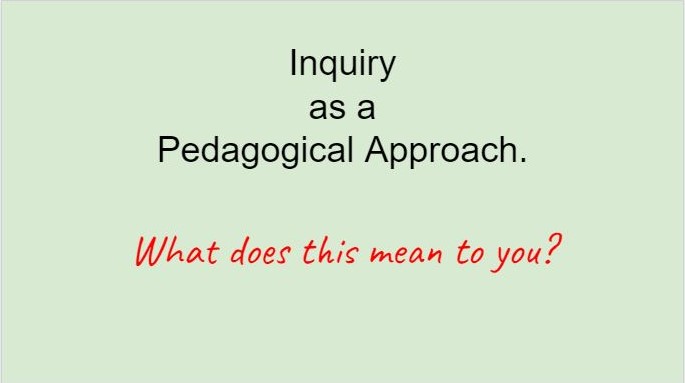
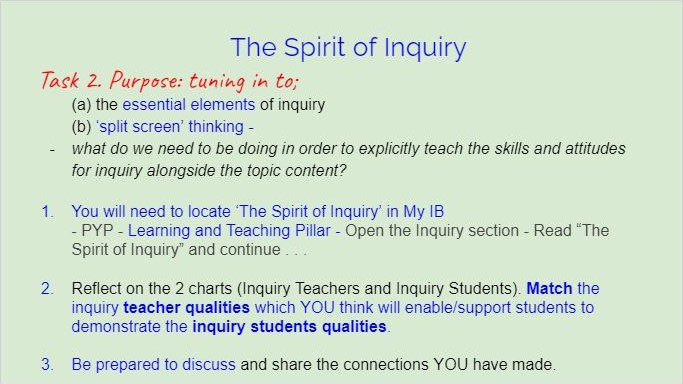
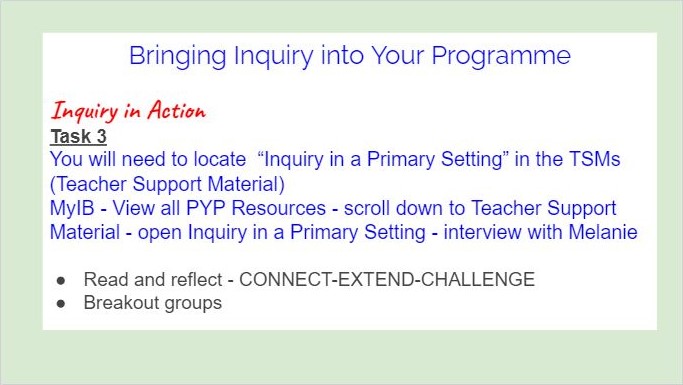
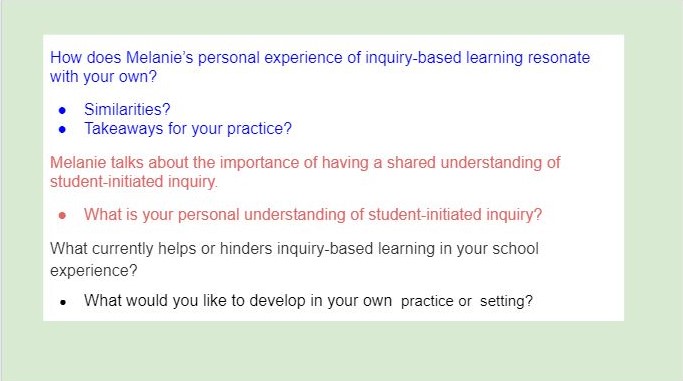
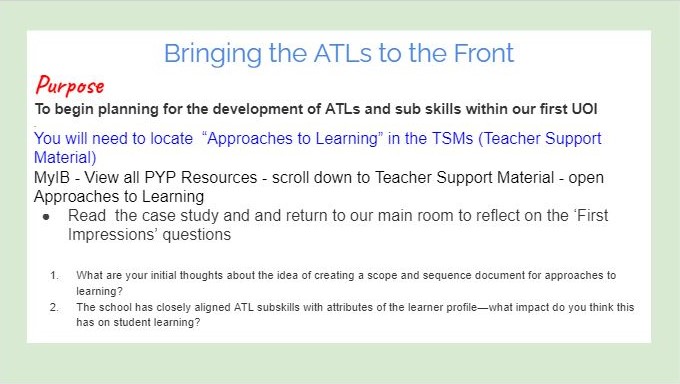
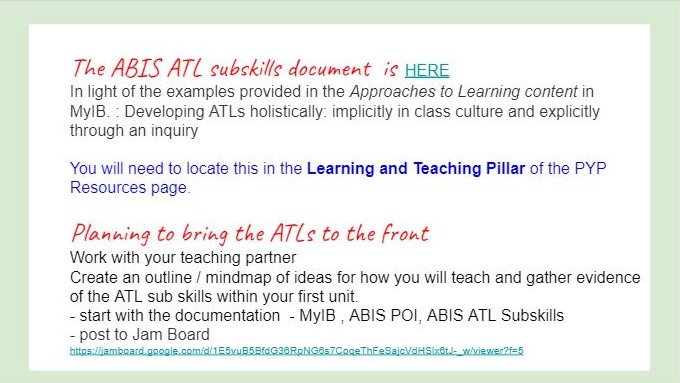
Kirsty presented the following slideshow and associated training to staff of Al Batinah International School, Oman, in 2020.





Further reading
2021 © K. Lottkowitz
 Kirsty Lottkowitz